
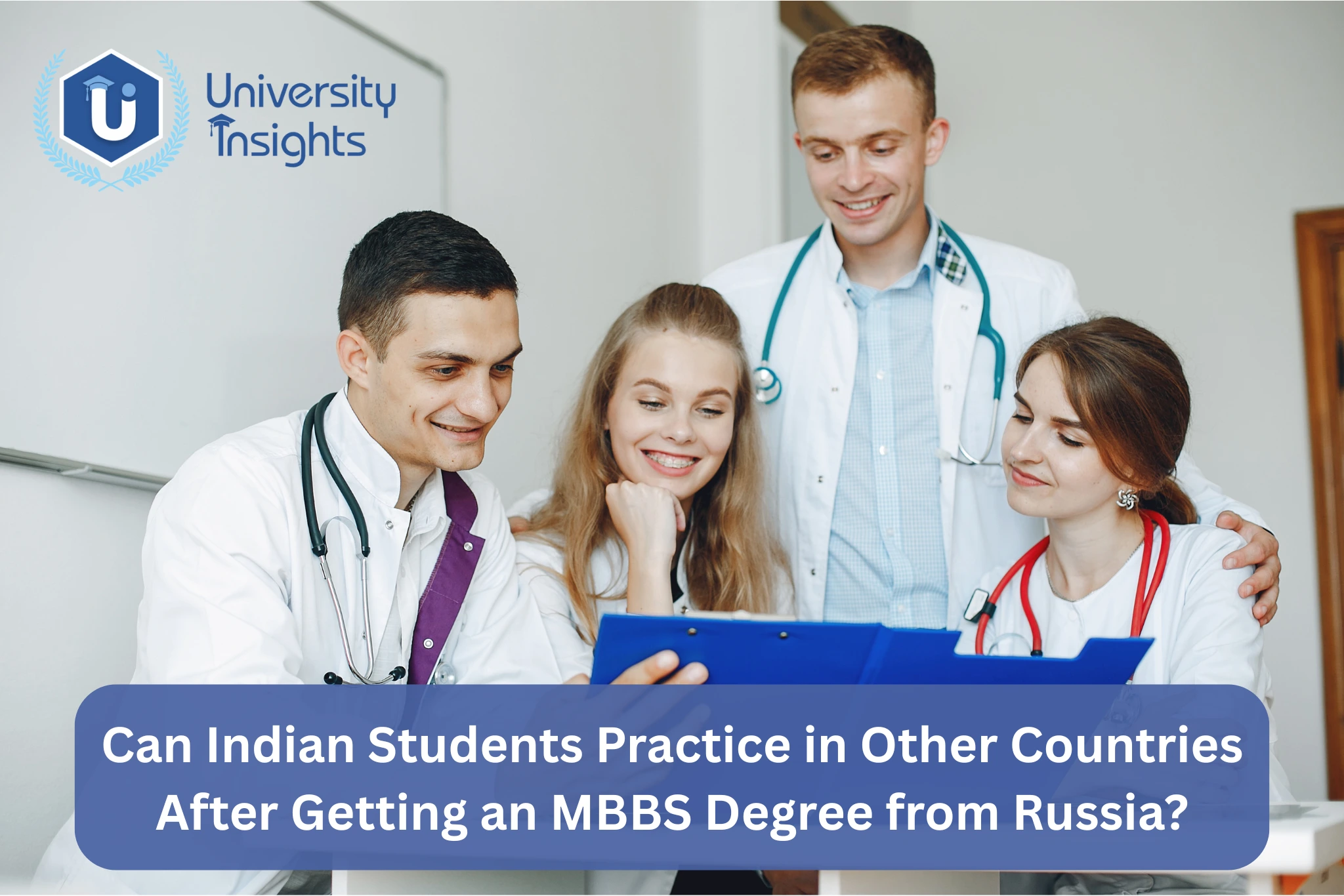
Can Indian Students Practice in Other Countries After Getting an MBBS Degree from Russia?
Can Indian Students Practice in Other Countries After Getting an MBBS Degree from Russia?
Can Indian students practice in other countries after getting an MBBS degree from Russia? This question is extremely important for aspirants planning to study MBBS abroad. While affordability and global recognition make Russia one of the top destinations for Indian medical students, many families also want clarity on long-term career opportunities.
Russia currently hosts 18,000+ Indian students enrolled in various medical universities. The MBBS degree from Russia is recognized worldwide, provided it is obtained from WDOMS-listed and NMC-approved universities. However, practicing in India or other countries requires licensing exams and compliance with local regulations.
This article provides a comprehensive guide on the global recognition of Russian MBBS degrees, the exams Indian graduates must clear to practice abroad, country-specific pathways (USA, UK, Canada, Gulf countries, Germany, Australia, etc.), and the challenges involved. By the end, you will know exactly how Indian students can build international medical careers after completing MBBS in Russia.
Can Indian Students Practice in Other Countries After MBBS in Russia?
The answer is Yes — Indian students can practice medicine in other countries after completing MBBS in Russia, but they must fulfill country-specific licensing requirements.
-
In the USA, graduates must clear the USMLE (United States Medical Licensing Examination).
-
In the UK, the path is through PLAB (Professional and Linguistic Assessments Board Exam).
-
In Germany, doctors are required to learn German and pass local licensing exams.
-
In Gulf countries, such as the UAE, Qatar, or Saudi Arabia, exams like DHA, MOH, and Prometric are required.
-
In Australia and Canada, exams such as AMC and MCCQE are necessary.
While the Russian MBBS degree is recognized globally, the ability to practice abroad depends entirely on passing the local licensing exams and meeting eligibility criteria.
Why Russian MBBS Degrees Are Recognized Internationally?
-
WDOMS Listing
-
Most top Russian universities are listed in the World Directory of Medical Schools (WDOMS).
-
This ensures global recognition of their degrees.
-
-
NMC Approval
-
NMC (India) recognizes MBBS degrees from NMC-approved Russian universities, provided students clear FMGE/NExT.
-
-
Strong Clinical Training
-
Russian universities emphasize practical skills, which align with international medical standards.
-
-
English-Medium Programs
-
Many universities offer MBBS in English, making it easier for students to prepare for exams like USMLE/PLAB.
-
Pathways to Practice in Different Countries
Practicing in India
-
Requirement: Clear FMGE/NExT.
-
Exam Pattern: 300 MCQs (FMGE), NExT will serve as both licensing + PG entrance.
-
Success Rate: Around 25–30% for Russian graduates in FMGE.
Practicing in the USA
-
Requirement: Clear USMLE (Step 1, Step 2 CK, Step 3).
-
Advantage: Russian MBBS is accepted for US residency applications.
-
Extra Effort: Students must prepare early for USMLE alongside MBBS.
Practicing in the UK
-
Requirement: Clear PLAB (Part 1 & 2).
-
Advantage: English-medium MBBS from Russia makes preparation easier.
-
Pathway: PLAB → GMC Registration → Practice in the UK.
Practicing in Canada
-
Requirement: MCCQE (Medical Council of Canada Qualifying Exam).
-
Pathway: MCCQE → Residency Training → Practice License.
Practicing in Australia
-
Requirement: Clear AMC (Australian Medical Council Exam).
-
Advantage: Graduates from Russia are eligible to apply, provided they pass AMC exams.
Practicing in Germany
-
Requirement: Learn German (B2/C1 level) + clear Approbation exam.
-
Advantage: Germany offers low-cost PG opportunities after MBBS in Russia.
Practicing in Gulf Countries (UAE, Qatar, Saudi Arabia, Oman, Kuwait)
-
Requirement: Clear local exams such as DHA (Dubai), MOH (UAE), Prometric (Qatar, Saudi Arabia, Oman).
-
Advantage: High salaries and tax-free income attract many Russian MBBS graduates.
Benefits of a Russian MBBS for International Practice
-
Global Recognition: Degrees from top Russian universities are accepted worldwide.
-
Strong Foundation: The curriculum covers both theory and clinical training.
-
Affordable PG Pathways: Students can pursue specialization in Europe or Asia after MBBS.
-
Flexibility: Graduates can attempt exams for multiple countries simultaneously.
Challenges Indian Students Face
-
Licensing Exams Are Tough
-
Low FMGE pass rates (~25–30%) show the difficulty level.
-
USMLE, PLAB, and AMC require years of preparation.
-
-
Language Barriers
-
In countries like Germany, fluency in the local language is mandatory.
-
-
Time & Cost of PG
-
Residency or PG training abroad can be expensive.
-
-
Recognition Issues
-
Students must ensure their chosen Russian university is NMC-approved and WDOMS-listed.
-
An International Career After MBBS in Russia
-
Choose NMC-approved universities in Russia.
-
Start exam preparation early (FMGE, USMLE, PLAB, etc.).
-
Join coaching programs while in Russia for better guidance.
-
Learn local languages if targeting countries like Germany or France.
-
Stay updated with licensing requirements from official boards.
FAQs: Can Indian Students Practice in Other Countries After Getting an MBBS Degree from Russia?
Q1. Can Indian students practice medicine abroad after completing an MBBS degree in Russia?
Yes, Indian students can practice abroad after clearing local licensing exams like USMLE, PLAB, AMC, or FMGE/NExT in India.
Q2. Is an MBBS from Russia valid in India?
Yes, provided the university is NMC-approved and the student clears FMGE/NExT.
Q3. Can Russian MBBS graduates work in the USA?
Yes, after clearing the USMLE (Step 1–3) and applying for residency.
Q4. Can Indian students with a Russian MBBS practice in the UK?
Yes, after clearing PLAB and registering with the GMC.
Q5. Do Gulf countries accept Russian MBBS graduates?
Yes, after clearing exams like DHA, MOH, or Prometric, depending on the country.
Q6. Is PG in Germany possible after MBBS in Russia?
Yes, provided you learn German and pass the licensing exam.
Q7. What is the FMGE pass rate for Russian MBBS graduates?
Around 25–30% in recent years, slightly better than other foreign MBBS destinations.
Q8. Is USMLE easier for Russian MBBS graduates?
It depends on preparation. English-medium programs help, but success requires dedicated USMLE prep.
Q9. Do Russian MBBS degrees help in Canada or Australia?
Yes, but you must clear MCCQE (Canada) or AMC (Australia).
Q10. Which countries are best for practice after MBBS in Russia?
India, the USA, UK, Germany, Gulf countries, and Australia are popular choices.
Conclusion
So, can Indian students practice in other countries after getting an MBBS degree from Russia? The answer is a resounding yes, provided they fulfill the licensing requirements of the respective countries. Russian MBBS degrees from NMC-approved, WDOMS-listed universities are globally recognized, making graduates eligible to pursue careers in India, the USA, the UK, Canada, Germany, Australia, and the Gulf nations.
However, the journey requires hard work, preparation, and strategy. Passing FMGE/NExT in India or USMLE/PLAB abroad demands early preparation and focused study. Students must also adapt to local languages and cultural norms in countries like Germany or France.
In short, MBBS in Russia provides a strong foundation for an international career in medicine, but success depends on the student’s choice of university, exam preparation, and career planning. With the right approach, Indian students can transform their Russian MBBS into a globally respected medical career.