How is the clinical exposure and hospital training for MBBS students in Iran?
How is the clinical exposure and hospital training for MBBS students in Iran?
How is the clinical exposure and hospital training for MBBS students in Iran? This is one of the most important questions Indian and international medical aspirants ask before choosing Iran as their MBBS destination. While fees, eligibility and recognition matter, the true quality of a medical degree is ultimately judged by clinical exposure, hands-on hospital training, patient interaction and real-world medical experience. On these parameters, Iran has steadily built a strong reputation, especially among students coming from Asia, the Middle East and Africa.
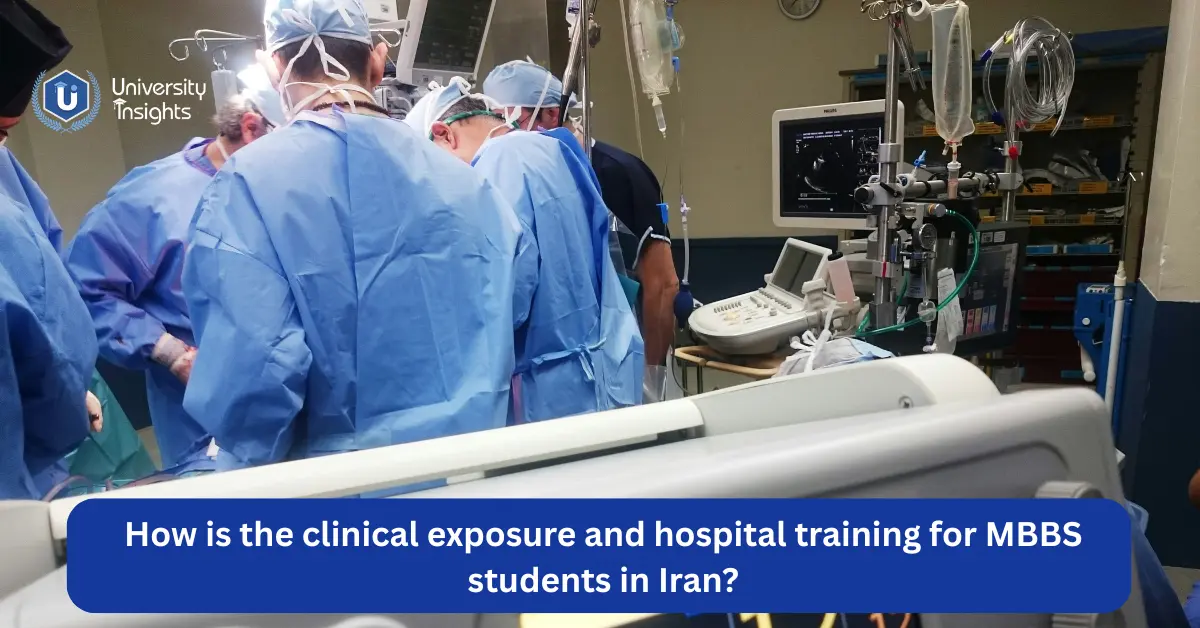
Iran’s medical education system is deeply hospital-centric. Unlike some countries where clinical exposure is limited or delayed, MBBS students in Iran are introduced to hospitals early and trained progressively in government teaching hospitals, super-specialty centers and university-affiliated medical facilities. These hospitals are not simulation-based institutions alone; they are working hospitals with real patients, heavy footfall and a wide range of medical cases.
This article explains in detail how is the clinical exposure and hospital training for MBBS students in Iran, covering teaching hospitals, patient flow, clinical rotations, internship structure, language support, comparison with other countries, and how this training benefits Indian students in exams like FMGE/NExT.
Overview of Clinical Training Structure in Iran
To understand how is the clinical exposure and hospital training for MBBS students in Iran, it is important to first understand the structure of the MBBS program itself. Medical education in Iran generally follows a 6 to 7-year structure, including pre-clinical, para-clinical and clinical phases, followed by a mandatory internship.
The initial years focus on basic sciences such as anatomy, physiology and biochemistry. However, even during these early stages, students are introduced to hospital environments through observational visits and basic patient interaction. As students move into the clinical phase, hospital training becomes the core of medical education.
Unlike many destinations where students remain confined to classrooms for most of the degree, Iran integrates hospitals directly with medical universities, ensuring continuous exposure to real clinical settings.
Teaching Hospitals Attached to Medical Universities
A major reason why clinical exposure is strong in Iran is the presence of large, government-funded teaching hospitals directly affiliated with medical universities. Universities such as Tehran University of Medical Sciences, Iran University of Medical Sciences, Shiraz University of Medical Sciences, Isfahan University of Medical Sciences and Golestan University of Medical Sciences operate their own hospitals.
These hospitals are not private or low-patient facilities. They are public referral hospitals, which means patients from cities, towns and rural areas visit them daily. This ensures that MBBS students encounter a wide variety of medical conditions, from common illnesses to complex and rare cases.
When evaluating how is the clinical exposure and hospital training for MBBS students in Iran, the presence of these high-volume teaching hospitals plays a critical role in shaping strong clinical competence.
Patient Load and Case Diversity
One of the biggest advantages of studying MBBS in Iran is the high patient inflow in government hospitals. Iran has a large population, and public hospitals are the first choice for treatment due to affordability and accessibility. As a result, students witness:
-
High OPD (Outpatient Department) attendance
-
Busy emergency departments
-
Continuous inpatient admissions
-
Diverse disease patterns
From internal medicine to surgery, pediatrics to gynecology, orthopedics to neurology, students observe and assist in managing a broad spectrum of cases. This diversity ensures that learning is not theoretical but case-based and practical.
When students ask how is the clinical exposure and hospital training for MBBS students in Iran, this exposure to real patients is often the most convincing factor.
Clinical Rotations During MBBS
Clinical rotations form the backbone of hospital training in Iran. Once students enter the clinical phase, they rotate through major departments in a structured manner. These rotations typically include internal medicine, general surgery, pediatrics, obstetrics and gynecology, orthopedics, psychiatry, dermatology, ENT, ophthalmology, radiology and emergency medicine.
During rotations, students are assigned to hospital wards under the supervision of senior doctors and professors. They participate in daily ward rounds, case discussions, patient history taking and basic examinations. Over time, students gradually take on more responsibility as their knowledge and confidence grow.
This step-by-step exposure explains clearly how is the clinical exposure and hospital training for MBBS students in Iran designed to build competence rather than overwhelm students.
Hands-On Training and Practical Skills
A common concern among Indian students is whether they will get hands-on training or only observe doctors from a distance. In Iran, clinical education emphasizes active participation. Under supervision, students are trained in:
-
Taking patient history
-
Performing physical examinations
-
Assisting in minor procedures
-
Observing surgeries closely
-
Writing case sheets and progress notes
-
Participating in diagnostic discussions
While major surgical procedures are handled by specialists, students are gradually allowed to assist and understand operative techniques. By the time students reach their internship year, they are comfortable handling basic medical responsibilities.
This practical exposure is a key reason why many students answer positively when asked how is the clinical exposure and hospital training for MBBS students in Iran.
Internship Year and Full-Time Hospital Posting
The internship year in Iran is one of the strongest aspects of medical education. During this period, students are posted full-time in hospitals and work almost like junior doctors. They rotate through core departments and are expected to manage patients under supervision.
Internship responsibilities typically include patient admission, monitoring vitals, assisting in procedures, emergency duty exposure and night shifts in some departments. This experience prepares students for independent medical practice and postgraduate entrance exams.
By the end of the internship, students have already spent thousands of hours inside hospitals, which significantly boosts their confidence and clinical judgment.
Language Barrier and Patient Communication
One important aspect when discussing how is the clinical exposure and hospital training for MBBS students in Iran is language. While classroom teaching in many Iranian universities is conducted in English for international students, patient communication often happens in Persian (Farsi).
To address this, universities provide basic Farsi language training during the early years of MBBS. Students learn common medical terms, symptoms and patient interaction phrases. Over time, most students adapt quickly, as daily hospital exposure naturally improves communication skills.
Many professors and resident doctors also assist international students during ward rounds, ensuring that language does not become a barrier to learning.
Role of Professors and Teaching Methodology
Clinical teaching in Iran is largely bedside-based. Professors and senior doctors conduct teaching rounds where real patient cases are discussed. Students are asked questions, encouraged to think critically and guided in diagnosis and treatment planning.
This interactive teaching style helps students understand the practical application of medical theory. Instead of memorizing textbook content, students learn how diseases present differently in real patients.
This approach strengthens diagnostic reasoning, which is essential for exams like FMGE/NExT and for future clinical practice.
Comparison with Other MBBS Destinations
When comparing how is the clinical exposure and hospital training for MBBS students in Iran with other countries, Iran stands out for its balance of affordability and quality exposure. In some countries, students face limited patient interaction due to low hospital footfall or language barriers. In others, private hospitals restrict student access.
Iran’s public healthcare system ensures that teaching hospitals remain open learning environments for students. This allows them to gain hands-on experience without paying extra clinical fees.
For Indian students in particular, the disease patterns and patient load in Iran are quite similar to India, which makes the transition back to India smoother after graduation.
Impact on FMGE and NExT Preparation
Clinical exposure plays a vital role in clearing licensing exams. Students trained in Iranian hospitals often report better understanding of subjects like medicine, surgery, pediatrics and obstetrics due to real-life exposure.
Understanding how is the clinical exposure and hospital training for MBBS students in Iran also helps explain why many graduates feel confident appearing for FMGE or the upcoming NExT exam. Clinical concepts become clearer when students have seen and managed cases themselves rather than only reading about them.
Ethical Training and Professional Development
Iranian medical universities place strong emphasis on medical ethics, patient confidentiality and professional behavior. Students are taught to respect patient dignity, follow ethical guidelines and develop empathy.
This holistic training ensures that graduates are not only clinically competent but also professionally responsible doctors.
Safety and Support During Hospital Training
Another important point when evaluating how is the clinical exposure and hospital training for MBBS students in Iran is student safety. Teaching hospitals maintain structured schedules, supervision and support systems for international students.
Universities have international student offices that help with hospital postings, communication issues and academic support. This ensures that students feel secure while undergoing rigorous clinical training.
Final Verdict: Is Clinical Exposure in Iran Worth It?
So, how is the clinical exposure and hospital training for MBBS students in Iran? The answer is clear: it is strong, structured, practical and patient-oriented. From early hospital exposure to intensive internship training, Iran provides a solid clinical foundation that prepares students for real-world medical practice.
Students gain experience in high-patient government hospitals, learn from experienced professors, develop hands-on skills and adapt to real clinical environments. For Indian students seeking quality clinical training at an affordable cost, Iran stands as a reliable and increasingly popular destination.
Choosing Iran for MBBS is not just about earning a degree—it is about becoming a confident doctor through real clinical experience and hospital-based learning.