How is Clinical Exposure in Uzbekistan Medical Universities?
How is Clinical Exposure in Uzbekistan Medical Universities?
When a student decides to become a doctor, the journey is not only about attending lectures, memorizing books, and clearing examinations. The real transformation happens in hospital corridors, emergency rooms, surgical theaters, and outpatient departments. This is where theoretical learning turns into real medical practice. This is where a medical student truly becomes a doctor.
Today, MBBS in Uzbekistan has become one of the most preferred choices for Indian students.
While affordability, NMC recognition, English-medium education, and global acceptance play important roles, one of the biggest reasons behind its popularity is the excellent clinical exposure offered by Uzbekistan medical universities. The quality of clinical training can shape the confidence, capability, and competence of a doctor. Therefore, it becomes extremely important to understand how strong the clinical exposure actually is in Uzbekistan and whether it truly benefits Indian medical aspirants.
This detailed guide explains exactly how Uzbekistan builds competent doctors through high-quality clinical training, modern hospitals, practical learning systems, and structured internship programs. The goal is to provide a clear and honest understanding so students and parents can make the right decision.
Why Clinical Exposure Matters More Than Anything in MBBS?
There is a huge difference between a student who has only learned medicine from textbooks and a student who has treated, observed, interacted, and managed real patients. Medicine is a profession where experience counts as much as knowledge. A doctor must develop immediate decision-making ability, strong observation skills, emotional stability, patient communication ability, and procedural efficiency — none of which can be gained through theory alone.
This is why the most important question when choosing a country for MBBS is not just about fees or recognition. The real concern is:
Will the student get strong clinical exposure?
Will they learn practically and handle real patients?
Will they be confident enough to practice after graduation?
Uzbekistan understands this need extremely well. Its medical education model is deeply rooted in hospital-based learning, hands-on training, and continuous patient interaction.
Why Uzbekistan Has Become a Preferred MBBS Destination for Indian Students?
In recent years, thousands of Indian students have selected MBBS in Uzbekistan as their medical career destination. There are multiple reasons behind this growing trend. Uzbekistan offers modern education, globally recognized universities, affordable tuition fees, English-medium programs, and a safe learning environment. However, the biggest attraction for serious medical aspirants is the depth and quality of clinical exposure they receive throughout their academic journey.
Medical universities in Uzbekistan are connected with well-established government teaching hospitals. These hospitals experience enormous patient inflow every day, allowing students to witness a diverse range of medical cases. Unlike countries where students only observe doctors, Uzbekistan ensures active participation in patient care, making students practically sound and experienced.
Understanding Clinical Exposure in Uzbekistan: A Deep Insight
Clinical exposure in Uzbekistan is designed to transform students slowly but steadily from beginners into confident professionals. Training does not begin suddenly in final years. Instead, it gradually develops through structured observation, interaction, and supervised practice.
In Uzbekistan, medical students are introduced to hospitals earlier than in many other countries. Even during the second academic year, students begin to get exposure to hospital environments. They start by observing doctors, understanding hospital protocols, and learning how departments function. This slow and steady beginning helps them feel comfortable in clinical settings rather than being overwhelmed later.
As they move forward in their course, the exposure increases significantly. By the time students enter senior years, they are already well familiar with hospital environments, patient interaction, and clinical responsibilities.
Real Hospital Training with Genuine Patient Interaction
One of the strongest aspects of Uzbekistan medical education is that clinical exposure is not symbolic or limited. It is real, intense, and meaningful. Students are not only passive observers. They are actively involved in different stages of patient care under proper supervision.
Uzbekistan’s hospitals receive a high number of daily patients. This naturally creates a vast opportunity for medical students to study various types of diseases, conditions, and treatment processes. Students learn how to take patient history, assess symptoms, understand diagnosis approaches, observe treatment protocols, and handle emergency scenarios.
This exposure allows students to understand different departments including Internal Medicine, Pediatrics, Surgery, Gynecology, Cardiology, Neurology, Orthopedics, and Emergency Medicine. By the time they complete their MBBS, they become confident enough to handle clinical responsibilities independently.
Modern Teaching Hospitals and Advanced Medical Infrastructure
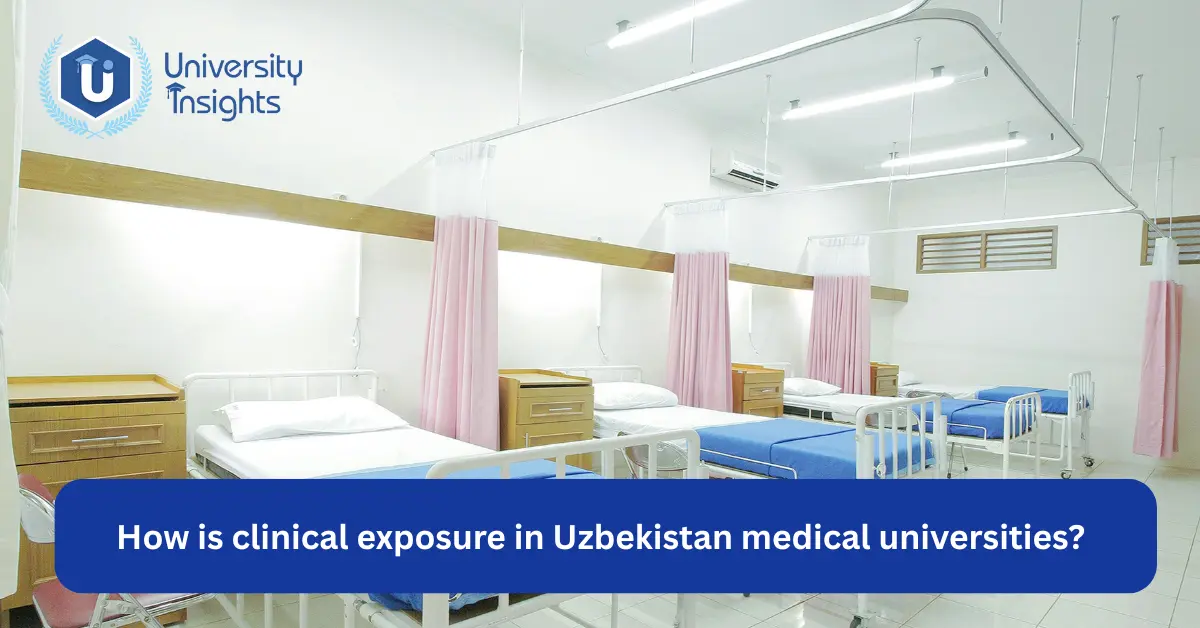
Practical medical education depends heavily on infrastructure. Uzbekistan has invested significantly in upgrading its healthcare sector. Medical universities are connected with modern and well-equipped hospitals. These hospitals include general hospitals, specialty centers, trauma hospitals, maternity hospitals, research centers, and regional clinical facilities.
Students get access to advanced diagnostic technologies, modern laboratories, updated surgical tools, intensive care setups, emergency care units, and technologically smart learning environments. These resources enable students to understand the role of technology in modern medicine and also prepare them for international medical standards.
Simulation labs play another major role in preparing students. Before handling real patients, students are trained through medical mannequins, simulated emergency cases, and virtual training practices. These pre-clinical training systems help students reduce clinical fear and develop stronger hand skills.
Structured Internship and Clinical Rotations
Another powerful feature of clinical exposure in Uzbekistan is its structured internship model. Students do not randomly move through clinical blocks. Instead, they follow a systematic rotational training schedule.
During their internship year, students rotate through multiple departments. They spend time in medicine, surgery, gynecology, pediatrics, ENT, cardiology, psychiatry, orthopedics, anesthesia, and emergency care. Each rotation has specific objectives and assessment protocols.
This structured exposure ensures that students develop comprehensive medical competence instead of limited knowledge. They graduate as doctors who are familiar with all branches of medicine.
Top Universities in Uzbekistan with Outstanding Clinical Exposure
When students search for the best university in Uzbekistan for MBBS, clinical training is one of the biggest deciding factors. Universities like Tashkent Medical Academy, Samarkand State Medical University, Bukhara State Medical Institute, and Fergana Medical Institute of Public Health are widely known for exceptional clinical systems. These institutions have strong hospital tie-ups, high patient flow, world-class teaching environments, experienced faculty, and international teaching standards.
They are NMC-approved, WDOMS-recognized, WHO-listed, and globally respected. For students planning MBBS in Uzbekistan for Indian students, these universities continue to remain top preferences.
Language and Communication in Clinical Practice
A common concern among Indian students is whether language creates difficulty during hospital training. The reality is simple. Academic education is completely taught in English. Students are additionally provided training to understand basic local language phrases for patient communication. Over time, students naturally develop conversational understanding which further smoothens their clinical practice. Therefore, language does not become a barrier.
Challenges Indian Students Fear — and How Uzbekistan Solves Them
Indian students often fear that foreign MBBS programs may not provide enough clinical exposure. Some countries are known for limited patient availability or primarily theoretical frameworks. Students worry whether they will get real patient handling, whether their degree will be practically valuable, or whether they will be confident enough to practice later in India.
Uzbekistan clearly resolves these concerns. It offers high-patient hospitals, early exposure, hands-on clinical engagement, continuous supervision, structured internships, and global recognition. This makes Uzbekistan a reliable and secure choice for serious medical aspirants who want practical excellence, not just degrees.
Facts, Data and Recognition Strength
Uzbekistan trains thousands of international students across multiple medical universities. A significant number of them are Indian. Universities are listed in WDOMS, recognized by WHO, approved by NMC, and globally trusted. The healthcare investment by Uzbekistan’s government has strengthened modern hospital infrastructure, research participation, and medical teaching quality. This also reflects in strong FMGE (NEXT) preparation outcomes where practical understanding plays a key role.
Comparison of Clinical Exposure: Uzbekistan vs Other Countries
When compared with many other international MBBS destinations, Uzbekistan stands out because it balances two crucial elements — affordability and quality. While India provides excellent exposure, private MBBS costs are extremely high. Some countries provide affordable MBBS but limited patient handling. Uzbekistan successfully delivers both — a reasonable budget and high-level practical exposure — making it a dependable choice.
Benefits of Uzbekistan Clinical Exposure for Indian Students
Clinical exposure in Uzbekistan does more than just teach medicine. It builds personality, confidence, empathy, professionalism, adaptability, and decision-making power. Students become emotionally stronger, medically sharper, and more aware of real patient needs. This helps them not only in FMGE/NEXT but also in global licensing examinations and long-term medical practice.
FAQs – Clinical Exposure in Uzbekistan
Is clinical exposure in Uzbekistan really good for MBBS students?
Yes, Uzbekistan offers strong, consistent, real hospital-based training with high patient interaction and supervised practice.
Do Indian students get enough real patient handling?
Yes, students participate in ward duties, case study evaluation, diagnosis support, and procedural assistance under supervision.
Are Uzbekistan medical universities recognized in India?
Yes, major universities are NMC-approved and WDOMS-recognized.
When does clinical exposure start?
Students begin early exposure from initial years and enter full clinical operations during senior years.
Are hospitals advanced and modern?
Yes, Uzbekistan has modern government and specialty hospitals with updated medical technology.
Is MBBS in Uzbekistan good for Indian students?
Yes, due to affordability, strong training, safety, English medium learning, and recognition.
Which is the best university for clinical exposure?
Tashkent Medical Academy, Samarkand State Medical University and Bukhara State Medical Institute are exceptional.
Does clinical exposure help in FMGE/NEXT?
Yes, practical understanding significantly increases performance in licensing examinations.
Is language a problem in patient interaction?
No, education is in English and students gradually learn required communication phrases.
Can graduates practice in India after MBBS in Uzbekistan?
Yes, after clearing FMGE/NEXT and fulfilling NMC norms.
Final Verdict
Clinical exposure defines the real value of an MBBS degree. Uzbekistan ensures that every medical student experiences authentic, meaningful, and structured clinical learning. With early hospital exposure, modern medical infrastructure, rich patient diversity, strong academic support, professional mentorship, and globally recognized medical standards, Uzbekistan undeniably offers impressive clinical excellence.
For MBBS in Uzbekistan for Indian students, it provides a complete combination of affordability, recognition, education quality, and strong real-world training. Students who graduate from Uzbekistan medical universities do not simply hold a degree — they carry experience, confidence, skill, and readiness to serve as successful doctors in India and internationally.
If you are looking for pure clinical strength along with a globally respected MBBS degree, Uzbekistan stands as one of the most promising destinations in the world today.