

MBBS in Iran has become a popular choice for international students, especially those seeking affordable and quality medical education. Among the leading institutions, Abadan University of Medical Sciences offers globally recognized programs that attract students from Asia, Africa, and the Middle East. For Indian students, pursuing MBBS in Iran for Indian Students ensures access to modern infrastructure, experienced faculty, and English-medium instruction at an affordable cost. The Iran MBBS program is well-structured, recognized by global medical councils, and provides strong clinical exposure. Students exploring MBBS Abroad often find Iran to be an ideal destination due to its safe environment and cultural similarities. Additionally, the MBBS in Iran fees are significantly lower compared to private colleges in India, making it a cost-effective option. Choosing Abadan University of Medical Sciences not only opens doors to international opportunities but also provides a solid foundation for a successful medical career.
Abadan University of Medical Sciences (AUMS) is a prominent medical institution situated in Abadan, Khuzestan Province, southwestern Iran. Established in 2012, AUMS has rapidly developed into a significant center for medical education, research, and healthcare services in the region .
AUMS offers a comprehensive range of undergraduate and postgraduate programs, including MBBS, nursing, public health, and various medical specialties. The university is dedicated to providing high-quality medical education, fostering research, and delivering healthcare services to the community. Its modern infrastructure and commitment to academic excellence make it an attractive destination for international students, including those from India.
For Indian students aspiring to pursue MBBS abroad, AUMS presents a viable option. The university’s MBBS program is conducted in English, facilitating ease of learning for international students. Additionally, the medium of instruction in English ensures that students from non-Persian-speaking countries can effectively engage with the curriculum.
Regarding eligibility, Indian students are required to have completed their higher secondary education (12th grade) with Physics, Chemistry, and Biology as core subjects. While the National Eligibility cum Entrance Test (NEET) score is not explicitly mentioned in the available sources, it is advisable for Indian students to have a valid NEET scorecard, as it may be beneficial for visa and recognition purposes.
The university’s commitment to international education is reflected in its diverse student body and the availability of programs tailored to meet global standards.
Abadan is strategically located in Khuzestan Province, offering students access to a blend of cultural heritage and modern amenities. The city’s proximity to major urban centers like Ahvaz enhances clinical exposure opportunities for medical students. Abadan’s well-developed infrastructure ensures that students have access to essential services, including transportation, healthcare, and recreational facilities, contributing to a conducive learning environment.
The student-to-faculty ratio at AUMS is approximately 10:1. This favorable ratio allows for personalized attention, interactive learning, and close mentorship, which are crucial for the rigorous demands of medical education. Such an environment fosters academic excellence and supports the holistic development of students.

Abadan University of Medical Sciences functions directly under the Ministry of Health and Medical Education (MOHME), Iran. This affiliation ensures that the university maintains high academic and medical training standards, regulated by the country’s top health authority. Being governed by MOHME guarantees that the curriculum, infrastructure, faculty qualifications, and research standards are updated according to modern healthcare requirements.
The university holds national accreditation in Iran, which makes its medical degrees fully valid across the country. This recognition allows graduates to pursue postgraduate studies, practice medicine, or work in Iran’s healthcare sector. It also reflects the credibility and reliability of the MBBS program offered at Abadan University.
Graduates of Abadan University of Medical Sciences are eligible to appear for globally recognized licensing examinations such as the USMLE (United States Medical Licensing Examination), PLAB (Professional and Linguistic Assessments Board) in the UK, and other qualifying tests. This global recognition opens opportunities for students to build their careers internationally after completing their MBBS.
The university is listed in the World Directory of Medical Schools (WDOMS), a global database of recognized medical institutions. This listing is essential for students who want to pursue higher education abroad or take part in exchange programs. It also ensures that their MBBS degree is accepted in countries that mandate WDOMS listing for further practice.
For Indian students, one of the key recognitions is from the National Medical Commission (NMC) of India. This ensures that Indian graduates from Abadan University can return home, register with the NMC, appear for the NEXT (National Exit Test), and legally practice medicine in India. This recognition is crucial for students looking to continue their medical careers in India after studying abroad.
Abadan University of Medical Sciences is recognized by the World Health Organization (WHO). This recognition highlights the institution’s credibility in global medical education and ensures that its graduates are valued worldwide. It also strengthens the university’s reputation among international students.
The university is affiliated with several teaching hospitals in Abadan, where students undergo extensive clinical training. These hospitals are equipped with modern healthcare facilities, allowing students to practice under real medical scenarios. Such exposure provides practical knowledge, making graduates highly skilled and job-ready for both domestic and international healthcare systems.
Abadan University of Medical Sciences has gained recognition as a student-friendly destination for international students. With learners coming from countries across Asia, Africa, and Europe, the university promotes cultural diversity and global networking. This recognition makes it an attractive choice for students looking for an internationally respected MBBS program at affordable costs.
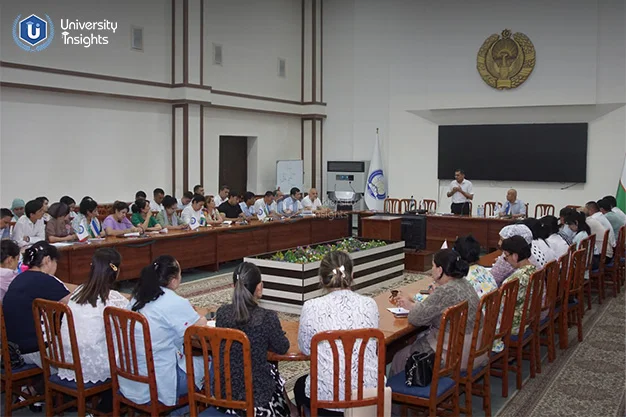
Cost-Effective Education: The total tuition fees for the 6-year MBBS program at AUMS range from ₹15 to ₹30 lakhs, which is significantly lower than the fees in private medical colleges in India, where costs can exceed ₹50 lakhs.
No Donation or Capitation Fees: AUMS does not require any donation or capitation fees, making it an economical choice for Indian students seeking quality medical education abroad.
Medium of Instruction: The MBBS program at AUMS is conducted in English, aligning with the language proficiency of Indian students and ensuring smooth comprehension of medical terminologies and concepts.
No Language Barrier: This eliminates the need for additional language courses, reducing both time and financial investment for students.
Transparent Fee Structure: AUMS maintains a transparent fee structure with no hidden costs, ensuring that students and their families can plan finances effectively.
Financial Accessibility: This policy makes medical education more accessible to a broader range of students, particularly those from middle-income backgrounds.
State-of-the-Art Facilities: AUMS boasts modern classrooms, laboratories, and libraries equipped with the latest technology to facilitate effective learning.
Hospital Affiliations: Students gain hands-on experience through clinical training at affiliated hospitals such as Taleghani Hospital, which is under the supervision of AUMS and serves as a therapeutic center.
International Recognition: AUMS is recognized by the World Health Organization (WHO) and listed in the World Directory of Medical Schools (WDOMS), ensuring that its MBBS degree is valid worldwide.
NMC Approval: The university is approved by the National Medical Commission (NMC) of India, allowing graduates to appear for the Foreign Medical Graduate Examination (FMGE) to practice in India.
Cultural Experience: Studying in Abadan offers Indian students the opportunity to experience Iranian culture, traditions, and cuisine, enriching their global perspective.
Safe Environment: Abadan is known for its safety and hospitality, providing a conducive environment for international students to live and study.
Direct Admission: AUMS offers a straightforward admission process for international students, eliminating the need for entrance exams or complex procedures.
Eligibility Criteria: Applicants must have completed 12th grade with Physics, Chemistry, and Biology, and meet the age requirement of 17 years by December 31st of the admission year.
Alumni Engagement: AUMS has a strong alumni network that actively engages with current students, providing mentorship, career advice, and networking opportunities.
Career Development: The alumni network assists students in exploring various career paths, including opportunities in research, healthcare, and academia.
Research Opportunities: Students at AUMS are encouraged to participate in research projects, contributing to advancements in medical science.
Publication Platforms: The Health and Medical Research Journal (HMRJ), a peer-reviewed publication of AUMS, offers students a platform to publish their research findings.
Specialized Training: AUMS provides clinical training in specialized departments such as perinatal, neonatal, and health management, equipping students with comprehensive medical skills.
Hands-On Experience: Students gain practical experience in these departments, enhancing their clinical competencies and preparing them for diverse medical challenges.
| Particulars | Details |
|---|---|
| Established | 2012 |
| Location | Abadan, Khuzestan Province, Iran |
| University Type | Public |
| Recognition | Recognized by Iranian Ministry of Health |
| MBBS Tuition Fees | Approximately $36,000 for 6 years |
| Medium of Instruction | English |
| Total MBBS Duration | 6 years (5 years academic + 1-year internship) |
| Campus | Modern infrastructure with clinical facilities |
| Eligibility | 12th grade with Physics, Chemistry, Biology |
| NEET Requirement | Not explicitly mentioned; NEET scorecard advisable |
| IELTS/TOEFL | Not required; English proficiency may be assessed |
| Medium of Teaching | English |
| Admission Intake | Typically in September |
The total MBBS tuition fees at AUMS range from ₹15–₹30 lakh for 6 years, depending on hostel and other facilities.
Compared to private Indian medical colleges, where tuition can exceed ₹50 lakh, AUMS offers a highly cost-effective medical education in rupees without compromising quality.
This allows Indian students to save significant funds while obtaining a globally recognized medical degree.
AUMS is recognized by the National Medical Commission (NMC) of India (formerly MCI).
Indian students graduating from AUMS can appear for the FMGE exam, the mandatory licensing test to practice medicine in India.
This ensures the degree is equivalent to Indian MBBS, allowing seamless integration into India’s healthcare system.
AUMS has state-of-the-art laboratories, research facilities, and modern classrooms, supporting high-quality medical education and research.
Students gain access to scientific resources, including journals, citations, and meta-analysis projects, fostering skills in clinical research and publication.
This prepares Indian students for both academic growth and global medical career opportunities.
AUMS has affiliated hospitals including Taleghani Hospital, where students participate in hands-on clinical training from the first year.
Indian students gain practical exposure in pediatrics, perinatal care, neonatal units, and internal medicine, building confidence in diagnosis and treatment.
Early clinical rotations enhance understanding of real-world patient management in diverse healthcare settings.
AUMS provides secure hostels with modern facilities for international students.
The city of Abadan is known for safety, cultural inclusivity, and a welcoming environment for Indian students.
Comfortable living arrangements help students focus on academic performance and medical education without stress.
Students have access to specialized departments in perinatal, neonatal, and pediatric healthcare, gaining expertise in preterm infants and respiratory syndrome care.
This exposure allows Indian students to develop clinical skills not always available in Indian undergraduate programs.
Students also learn fetal monitoring, neonatal treatment protocols, and health management techniques, enhancing their clinical competence.
AUMS encourages students to contribute to medical journals and participate in research and meta-analysis projects.
Indian students can publish in peer-reviewed health and medical journals, improving their academic profile.
Research experience increases prospects for higher education, global residency programs, and competitive postgraduate courses.
Abadan’s student-friendly environment allows Indian students to integrate smoothly with local and international peers.
Cultural compatibility and English-medium instruction ensure effective communication and a sense of community.
Indian students benefit from a supportive network, both socially and academically.
Admission to AUMS is transparent, without any donation or capitation fees, reducing financial burden.
The fee structure is regulated by the university, allowing students to plan their tuition and living expenses efficiently.
AUMS provides clinical internships at affiliated hospitals, including exposure to graduate and undergraduate healthcare programs.
Students may participate in international research collaborations, enhancing knowledge, skill development, and global medical education experience.
This ensures Indian students graduate with hands-on experience and international exposure, making them competitive in the global healthcare sector.
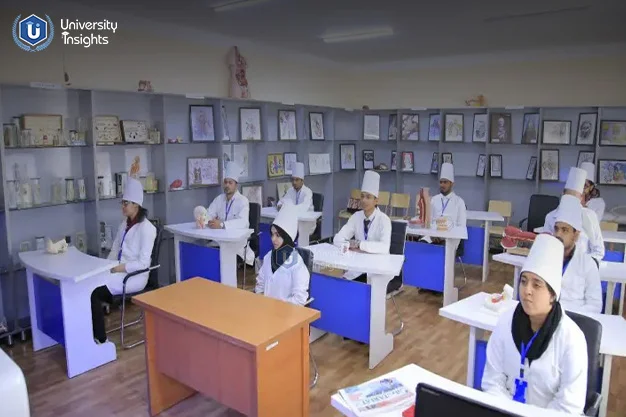
The MBBS program at Abadan University of Medical Sciences (AUMS) spans a total of 6 years, structured to provide comprehensive medical education combining theoretical knowledge and practical clinical exposure. The program is divided into three main phases:
Pre-Clinical Phase (Years 1–2)
Focuses on foundational medical sciences such as anatomy, physiology, biochemistry, and basic health and medical education.
Indian students gain a strong base in core subjects necessary for NEET exam equivalency and FMGE eligibility.
Clinical Phase (Years 3–5)
Involves hands-on clinical training in internal medicine, surgery, pediatrics, obstetrics & gynecology, and community health.
Students rotate through affiliated hospitals, including Taleghani Hospital and other Khuzestan Province medical centers, to gain exposure to real-world patient care.
Special focus on perinatal, neonatal, and health management programs, including preterm infants care and respiratory syndrome management, aligning with Indian clinical practices.
Internship Phase (Year 6)
A mandatory 1-year clinical internship allows students to practice under supervision in hospital departments, ensuring readiness for professional practice.
Indian students completing this phase become eligible to appear for the Foreign Medical Graduate Examination (FMGE) conducted by NMC in India.
Start of Academic Session: September every year.
Admission Deadline for Indian Students: Usually by July, allowing sufficient time for visa processing, travel arrangements, and NEET score verification.
| Phase | Duration | Key Focus |
|---|---|---|
| Pre-Clinical | 2 Years | Anatomy, Physiology, Biochemistry, Basic Medical Education |
| Clinical | 3 Years | Surgery, Pediatrics, Obstetrics & Gynecology, Community Health |
| Internship | 1 Year | Hospital-based practical training, patient management, perinatal & neonatal care |
The structured 6-year MBBS program at AUMS ensures that Indian students receive a globally recognized medical degree with a balanced focus on academic knowledge, clinical exposure, and practical healthcare skills, making it comparable to MBBS programs in India and other international institutions.
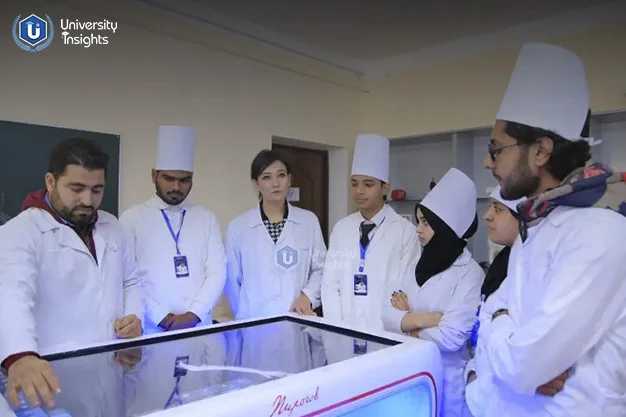
Abadan University of Medical Sciences (AUMS) offers a wide range of faculties focused on medical education, health sciences, and clinical research, providing Indian students with a comprehensive platform to pursue their MBBS and allied programs.
Offers the MBBS program and advanced medical courses.
Provides training in internal medicine, pediatrics, surgery, obstetrics & gynecology, perinatal care, and neonatal care, aligning with Indian NEET and FMGE eligibility standards.
Students gain practical exposure in affiliated hospitals, including Taleghani Hospital, ensuring hands-on clinical experience from the early years.
Focuses on nursing education and training, emphasizing patient care, hospital management, and clinical rotations.
Indian students can explore nursing courses alongside MBBS programs for interdisciplinary healthcare knowledge.
Students gain exposure to healthcare service delivery, patient management, and hospital protocols in Iranian medical settings.
Covers programs in public health, community health, epidemiology, and preventive medicine.
Provides training in health management, disease prevention, and clinical research, supporting Indian students in developing a broader understanding of healthcare systems.
Offers opportunities to participate in research projects, meta-analysis, and journal publications in collaboration with international institutions.
Offers programs in laboratory sciences, radiology, physiotherapy, and emergency medical services.
Prepares students for hospital-based technical roles, enhancing their practical skills in diagnostic and therapeutic services.
Indian students can gain hands-on experience in perinatal and neonatal care departments, complementing their MBBS training.
Provides courses in dental medicine, oral surgery, and preventive dentistry.
Students develop clinical skills in patient care, dental procedures, and oral health management, aligned with international standards.
Offers practical rotations in hospital-affiliated dental clinics, enhancing clinical exposure for Indian students.
Offers programs in pharmaceutical sciences, pharmacology, and drug development.
Indian students gain knowledge about medication management, pharmacotherapy, and clinical pharmacy services.
Faculty emphasizes research, scientific publications, and collaboration with medical departments, allowing students to integrate medical and pharmaceutical expertise.
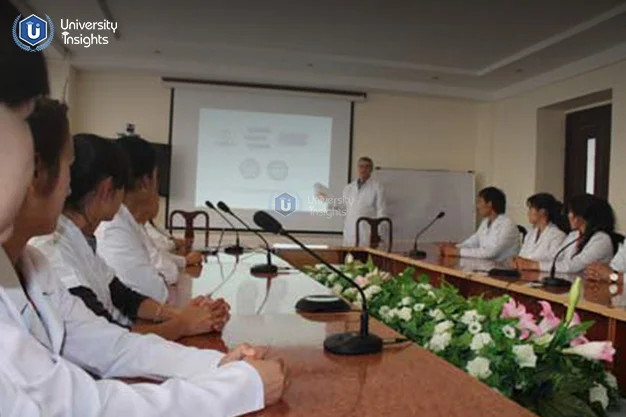
| Year | Tuition Fee (USD) | Tuition Fee (INR) | Hostel Fee (USD) | Hostel Fee (INR) | Total Fee (USD) | Total Fee (INR) |
|---|---|---|---|---|---|---|
| 1st | $5,200 | ₹442,000 | $300 | ₹25,500 | $5,500 | ₹467,500 |
| 2nd | $3,000 | ₹255,000 | $300 | ₹25,500 | $3,300 | ₹280,500 |
| 3rd | $3,000 | ₹255,000 | $300 | ₹25,500 | $3,300 | ₹280,500 |
| 4th | $3,000 | ₹255,000 | $300 | ₹25,500 | $3,300 | ₹280,500 |
| 5th | $3,000 | ₹255,000 | $300 | ₹25,500 | $3,300 | ₹280,500 |
| 6th | $3,000 | ₹255,000 | $300 | ₹25,500 | $3,300 | ₹280,500 |
| Total | $20,500 | ₹1,735,000 | $1,800 | ₹153,000 | $22,300 | ₹1,888,000 |
Medium of Instruction: English
Recognition: Listed in the World Directory of Medical Schools (WDOMS), approved by the Medical Council of India (MCI), and recognized by the World Health Organization (WHO).
Admission Requirements:
NEET: Required for Indian students.
NEET Scorecard: Must be provided during the application process.
NEET Qualifying Score: Indian students must meet the minimum qualifying score as per MCI guidelines.
Application Deadline: Typically closes by July; it’s advisable to apply early to ensure timely processing of visas and other formalities.
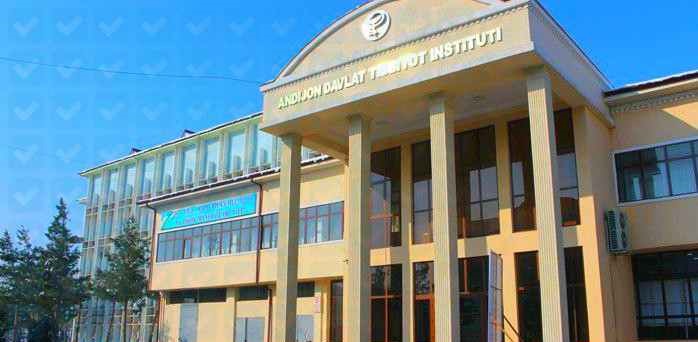
| Rank Type | Position |
|---|---|
| National Rank | Top 20 in Iran |
| Global Rank | Within 1200–1500 in QS/WUR metrics |

Indian students who wish to pursue MBBS in Abadan University of Medical Sciences (AUMS) must meet the following eligibility criteria to ensure compliance with both Iranian medical education standards and Indian NEET/FMG requirements:
Indian applicants must have qualified the NEET exam, as per National Medical Commission (NMC) regulations.
The NEET scorecard must meet or exceed the minimum qualifying score set for foreign medical education eligibility.
This ensures that graduates from AUMS can appear for the Foreign Medical Graduate Examination (FMGE) in India.
Students must be at least 17 years old at the time of admission.
This aligns with international medical education standards and ensures readiness for rigorous MBBS programs.
Completion of 10+2 or equivalent with subjects including Physics, Chemistry, Biology, and English.
Students must have secured a minimum aggregate of 50% (40% for reserved categories, if applicable) to be eligible for admission.
This ensures students possess a strong foundation in health and medical sciences for higher education in medicine.
Applicants must hold a valid international passport for visa processing and entry into Iran.
Proper documentation is essential for admission, travel, and residency compliance.
Students must provide a medical fitness certificate, confirming they are free from contagious diseases and physically fit to undertake the MBBS program.
This is mandatory to ensure safe participation in clinical rotations, hospital training, and community health programs.
Admission to AUMS is transparent and merit-based.
There is no donation or capitation fee, making it a cost-effective alternative for Indian students seeking quality medical education abroad.
Indian students aiming to pursue MBBS at Abadan University of Medical Sciences (AUMS) need to follow a structured admission process that ensures eligibility compliance, document verification, and smooth enrollment for international medical education. The following steps explain the process in detail:
Visit the official AUMS website to access the online admission portal.
Complete the application form with personal information, academic details, passport information, and program selection.
Select MBBS under the Faculty of Medicine, ensuring English-medium instruction for Indian students.
Upload scanned copies of photographs, signatures, and academic certificates in the required format.
Indian students must provide a valid NEET scorecard, meeting the minimum qualifying score for FMGE eligibility in India.
Submit 10+2 mark sheets with Physics, Chemistry, Biology, and English, along with passport copy.
Attach a medical fitness certificate verifying that the student is fit for international medical studies and clinical rotations.
Ensure documents are official, certified, and translated into English or Farsi if required.
The admissions office at AUMS carefully verifies all submitted documents for authenticity and eligibility.
Verification includes:
Confirming NEET qualifying score and marks.
Checking age requirement (minimum 17 years).
Validity of passport and health certificate.
Any discrepancies are communicated to students, and additional proof may be requested for international compliance.
Upon successful verification, students receive a provisional admission letter from the university.
This letter is crucial for:
Student visa application at the Iranian embassy.
Final enrollment confirmation and hostel allocation.
Planning travel and arrival in Abadan city.
Indian students are required to pay tuition fees in USD or converted into INR (1 USD = ₹85).
Fee payment confirms admission and secures the student’s seat in the MBBS program.
Payment typically covers:
Tuition for pre-clinical and clinical years.
Hostel and accommodation charges.
Access to hospital and clinical facilities, labs, and research resources.
Submit the provisional admission letter, passport, and financial documents to the Iranian embassy.
The embassy issues a student visa, enabling legal residence and enrollment in Abadan city, Khuzestan province.
Students should apply well before the September academic session to allow time for visa processing.
Students arrive in Abadan before the start of the academic session (usually September).
Attend orientation programs covering university rules, academic schedule, hostel guidelines, and healthcare protocols.
Begin the structured 6-year MBBS program, which includes pre-clinical, clinical, perinatal, neonatal, and hospital-based training.
University provides support services, international student guidance, and mentoring programs.
Indian students can connect with senior Indian alumni, facilitating cultural adaptation and academic guidance.
Early exposure to research, journals, and clinical rotations ensures a smooth transition into international medical education.
Indian students applying for MBBS at Abadan University of Medical Sciences (AUMS) must prepare and submit a complete set of academic, personal, and medical documents. These documents are essential both for securing university admission and for the Iranian student visa application. Below is a detailed breakdown:
Required as per Medical Council of India (MCI) guidelines for studying medicine abroad.
Students must meet the NEET qualifying score (updated annually by NMC).
The scorecard is necessary for eligibility in FMGE/NExT licensing exam after graduation.
A valid passport with at least 18 months validity from the date of admission.
Must include a clear scan of the first and last page.
Used for both admission confirmation and visa application.
Class 10 certificate as proof of age and schooling.
Class 12 mark sheet showing completion of Physics, Chemistry, Biology, and English with minimum 50% marks (40% for reserved categories).
Transcripts must be attested and notarized before submission.
Proof of date of birth confirming that the applicant is 17 years or above at the time of admission.
Must be issued by a recognized municipal or government authority.
Issued by a registered medical practitioner.
Must confirm the student is medically fit to undertake long-term studies and clinical training.
Should also state that the applicant is free from communicable diseases.
Recent passport-size photographs (35mm x 45mm).
White background, clear visibility, no shadows.
Required for:
Admission form
Visa application
University ID card and hostel registration
Duly filled application form from the official AUMS website.
Must include student’s personal details, academic history, and program applied (MBBS).
Attach supporting documents before final submission.
Issued by the Iranian Embassy or Consulate in India after submission of required documents.
Must be presented at the time of travel and university enrollment.
Migration Certificate from previous school board.
Character Certificate from the last attended institution.
Financial/Bank Statement of parents or guardians showing ability to cover tuition and living costs.
COVID-19 vaccination certificate or health clearance (as per latest international travel regulations).
| Year | Subjects / Focus Areas | Details for Indian Students |
|---|---|---|
| Year 1 (Pre-Clinical) | Anatomy, Physiology, Biochemistry | Builds foundation of medical science; equivalent to 1st MBBS in India. |
| Year 2 (Pre-Clinical & Para-Clinical) | Microbiology, Pathology, Pharmacology, Forensic Medicine, Community Medicine | Includes laboratory sessions; students start early exposure to public health and medical education. |
| Year 3 (Para-Clinical & Clinical) | Clinical Pathology, General Medicine, Surgery basics, Ophthalmology, ENT | Students begin hospital visits and early patient interactions in Abadan city hospitals. |
| Year 4 (Clinical) | Pediatrics, Obstetrics & Gynecology, Orthopedics, Dermatology | Special emphasis on pediatr, perinatal, and neonatal care training. |
| Year 5 (Advanced Clinical) | Internal Medicine, Psychiatry, Emergency Medicine, Radiology, Anesthesiology | Practical exposure to healthcare services in affiliated teaching hospitals across Khuzestan province. |
| Year 6 (Internship/Rotatory Training) | Compulsory Internship across Medicine, Surgery, Pediatrics, Obstetrics & Gynecology, Community Medicine | Clinical rotations provide direct patient management, exposure to respiratory syndrome, hypertension, and perinatal outcomes. |
English-Medium Instruction
Complete MBBS course is taught in English for international students including Indians.
Simplifies transition for Indian students after NEET exam qualification.
Integrated Clinical Training
Clinical exposure starts from 2nd year onwards in university-affiliated hospitals.
Departments include neonatal, respiratory, pediatr, perinatal, and nursing.
Scientific Research Opportunities
Students can participate in research projects, meta-analysis, and journal publications.
Encouraged to co-author articles in health and medical journals published by the university.
Global Relevance
Curriculum aligned with WHO standards and listed in World Directory of Medical Schools (WDOMS).
Degree eligible for FMGE/NExT exam in India and licensure exams in the USA, UK, etc.
Clinical Rotations in Khuzestan Province
Practical exposure in Abadan city hospitals and referral centers in nearby Ahvaz.
Students gain experience in healthcare delivery in both urban and rural sectors.
The abadan university of medical sciences provides separate hostels for male and female students, ensuring privacy and cultural comfort.
Rooms are fully furnished with beds, study tables, chairs, cupboards, and attached/common washrooms depending on room type.
Wi-Fi access, study halls, and reading rooms are available to support academic requirements.
The hostel fee is included separately from tuition and is affordable when converted into rupee terms, making it cost-effective for Indian students compared to Indian private colleges.
Laundry, housekeeping, and recreational areas are provided to ensure a comfortable stay.
The university has canteens and cafeterias that serve Iranian cuisine along with Indian-friendly meal options.
Vegetarian, non-vegetarian, and halal food are available to suit different cultural needs of international student communities.
Meals are prepared in a clean and hygienic dining environment as per university health standards.
Students also have access to nearby local restaurants and grocery stores in Abadan city for more variety.
24/7 security personnel and wardens are deployed in each hostel block for safety.
CCTV surveillance systems cover all hostel premises.
A medical support team and university-affiliated hospital services are available to handle emergencies.
Female students have additional dedicated wardens to maintain a secure environment.
Fire safety systems and regular checks are implemented as part of university healthcare standards.
For Indian students pursuing MBBS at the abadan university of medical sciences, the average living cost in iran is considerably lower compared to Indian metropolitan cities. Below is the approximate monthly expense when calculated in rupee terms (1 USD ≈ ₹85):
| Expense | Approximate Cost (INR) |
|---|---|
| Food (university cafeteria + self-cooking) | ₹10,000 |
| Transport (local bus, shared taxi) | ₹3,000 |
| Miscellaneous (books, internet, personal needs) | ₹5,000 |
| Total | ₹18,000–₹20,000 |
Students can manage a comfortable lifestyle in khuzestan province on ₹18,000–₹20,000 per month, which is nearly half the expense of living in Indian private medical colleges in big cities like Delhi or Mumbai.
Public transport is subsidized for student use, while healthcare access through university-affiliated hospitals reduces medical costs.
Shared accommodation and Indian food availability further bring down monthly spending.
The local community in Abadan city is welcoming, ensuring international students adjust easily while maintaining safety and academic focus.
The medical education cost in Iran is substantially lower than in private medical colleges in India.
Tuition fees for MBBS at abadan university of medical sciences range between USD 4,000–5,000 per year (approx. ₹3.4–4.2 lakh at 1 USD = ₹85).
Average living cost for international student is about ₹18,000–₹20,000 per month including food, transport, and miscellaneous.
Over 6 years (including internship), an Indian student spends about ₹25–30 lakh, saving more than ₹20 lakh compared to Indian private medical school.
The MBBS degree from Iran, including AUMS, is recognized by the National Medical Commission (NMC, formerly MCI).
This recognition makes Indian graduates eligible for the FMGE/NExT exam.
Successful clearance of NMC screening enables medical employment in India and eligibility for postgraduate diploma or higher studies abroad.
The mbbs program at AUMS is available in English, eliminating the barrier of learning Persian at the start.
This structure supports Indian undergraduate students to adapt quickly.
Basic Persian is introduced gradually for patient interaction during clinical postings.
Iran strongly emphasizes research and publication.
Students can work alongside researcher teams in medical sciences, nursing, and public health programs.
They gain opportunities to contribute as author in journal articles, participate in review papers, and build their citation profile.
Emphasis is placed on impact factor, publisher guidelines, and contribution to scientific volume indexing for academic credibility.
Clinical exposure begins in the 2nd or 3rd year, unlike in some countries where it starts late.
Students practice in university-affiliated hospital networks in khuzestan province.
Departments include pediatrics, obstetrics, perinatal and neonatal care, cardiology, and nursing services.
This enhances evaluation skills, clinical competence, and patient interaction confidence.
Abadan city provides a safe and affordable environment.
On-campus hostels offer fully furnished rooms, Wi-Fi, and security services.
CCTV surveillance and wardens ensure student safety.
The university maintains a medical support system with 24/7 emergency healthcare services.
Faculty members frequently collaborate with international organizations and publish article contributions in indexed journals.
Students benefit from exposure to international standards of medical education and academic research.
Clinical training takes place in modern hospitals linked with abadan university of medical sciences.
Special focus on neonatal and perinatal health provides unique opportunities for Indian students interested in pediatrics.
Students observe and practice under professional supervision, ensuring structured performance evaluation.
Indian students find cultural similarities in food, religion, and lifestyle.
Iranian cuisine includes vegetarian and non-vegetarian meals, making it easy to adjust.
The city environment supports international students with accessible public service and transport.
Admission is transparent with no capitation or donation fees.
Students only pay official tuition and hostel charges as listed by the institution.
This makes it financially more viable than many private Indian medical school options.
The admission office issues the visa approval letter once the student receives the provisional admission.
Iran student visas are relatively straightforward to obtain for Indian students through the embassy.
MBBS degrees from Iran are recognized by world bodies such as WHO and are listed in the World Directory of Medical Schools.
This recognition allows graduates to apply for medical employment in several countries.
Students can pursue further academic advancement like postgraduate diploma, master’s, or PhD programs in international universities.
AUMS emphasizes training in pediatrics, perinatal medicine, and neonatal intensive care.
Students gain in-depth exposure to respiratory distress syndrome, hypertension in pregnancy, and perinatal management.
This specialization prepares them for higher review and evaluation in maternal and child healthcare.
Studying MBBS in Iran is highly cost-effective compared to Indian private universities. Tuition fees in most universities, including Abadan University of Medical Sciences, range between USD 4,000–5,000 annually (₹3.4–4.2 lakh at 1 USD = ₹85). Over the full six years, this saves Indian students nearly ₹20–25 lakh compared to private colleges in India. The MBBS degree is globally recognized as Iranian universities are listed in the World Directory of Medical Schools (WDOMS), approved by WHO, and accepted for FMGE/NExT in India.
Iranian universities provide state-of-the-art infrastructure, including simulation centers, advanced laboratories, and well-equipped hospitals. Students gain hands-on learning from the early years of their MBBS, working with modern diagnostic and treatment technologies. This allows Indian students to practice in an environment that matches international standards of medical education.
Abadan University of Medical Sciences emphasizes research-driven medical education. Indian students can participate as an author or co-author in international medical journal publications, contribute to systematic review articles, and collaborate with experienced researcher teams. Opportunities to work with reputed publisher platforms improve their academic citation record, enhance their impact in the medical field, and increase global employment prospects after graduation.
Iran shares a cultural closeness with India, making it easier for students to adapt. Food, traditions, and lifestyle in Iran are compatible with Indian habits, and Indian food options are widely available on campus and in hostels. Students feel more at home and experience less cultural shock, helping them focus fully on their academic performance.
Iran offers a safe and student-friendly environment. Hostels have separate accommodations for male and female students, supported by 24/7 security and CCTV monitoring. Wardens are appointed for student safety, and universities provide immediate healthcare and medical service within the campus, ensuring international students live in a secure and comfortable atmosphere.
The MBBS program is taught in English for international students, which is a major advantage for Indians. This removes language barriers in learning core medical subjects. Students are also taught basic Persian during the course to interact with local patients in hospitals, which enriches their communication skills during clinical training.
Unlike many countries where hospital exposure starts late, Iranian universities provide clinical exposure from the second or third year itself. Students rotate across departments such as pediatrics, obstetrics, neonatal, and perinatal medicine in affiliated hospital networks. This ensures a balance of theoretical knowledge with practical patient-care evaluation.
Graduates of Abadan University of Medical Sciences are eligible to sit for India’s FMGE (Foreign Medical Graduate Examination), soon to be replaced by NExT. Clearing this exam enables Indian students to register with the National Medical Commission (formerly MCI) and practice medicine in India. They can also pursue postgraduate degree or diploma programs for higher specialization.
Indian students benefit from an established alumni community of graduates working across India, the Middle East, and other countries. This network helps new students with academic mentoring, guidance for publishing in reputed journal platforms, career review discussions, and advice on internships, licensing exams, and employment opportunities in the global healthcare sector.
Applying for MBBS Abroad is a big decision, and many students often feel confused about the admission process, eligibility, documents, and future opportunities. At University Insights, our mission is to make this journey smooth and transparent for every aspirant who dreams of studying MBBS in Iran. With years of experience in international medical education counseling, we provide complete end-to-end assistance for Abadan University of Medical Sciences admissions.
Our process begins with one-on-one career counseling sessions to understand the student’s academic background, financial capacity, and career aspirations. We guide students in comparing Iran MBBS with other destinations like Russia, Uzbekistan, Egypt, or Bangladesh, so they make an informed choice. For those specifically interested in MBBS in Iran for Indian Students, we explain how the education system works, the value of the degree in India, and the steps to practice medicine after returning.
Filling out university applications and preparing the required paperwork is often the most challenging part for students. We simplify this by:
Helping with the application form for Abadan University of Medical Sciences.
Guiding students in preparing essential documents such as academic transcripts, NEET qualification proof, passport, and photographs.
Ensuring that all documents meet the university’s and the Ministry of Health and Medical Education, Iran’s standards.
Submitting applications within deadlines to secure seats early, as admissions work on a first-come, first-served basis.
The student visa process for Iran can sometimes seem complicated, but our experts make it hassle-free. We assist with:
Preparing visa application files with complete accuracy.
Guiding students for the embassy interview and ensuring they are fully prepared.
Helping in travel planning, including flight bookings, foreign exchange, and insurance.
Conducting pre-departure briefings, where we explain everything from the academic calendar to lifestyle adjustments in Iran.
Moving abroad can be intimidating for both students and parents. That is why we extend our support even after admission:
Helping students secure safe and affordable hostel facilities near Abadan University of Medical Sciences.
Providing information on food options, especially Indian mess facilities for Indian students in Iran.
Offering local support during the first few weeks to help students adjust comfortably.
Our guidance does not end once a student gets admission. We continue to support students throughout their MBBS journey in Iran by:
Providing updates about curriculum changes and examination patterns.
Assisting with preparation strategies for exams like NEXT (National Exit Test), USMLE, and PLAB, which are crucial for international medical practice.
Offering guidance for postgraduate studies or specialization opportunities worldwide.
Parents often worry about their child’s safety and education quality abroad. To address this, we maintain regular communication with parents, updating them on the student’s progress, living conditions, and academic achievements.
With our expert guidance, securing admission for MBBS in Iran at Abadan University of Medical Sciences becomes a simple, transparent, and stress-free process. We aim not only to help students get admission but also to shape their journey toward becoming successful, globally recognized doctors.
| Country | Approx. Total MBBS Fee (6 Years) | Highlights |
|---|---|---|
| Russia | ₹18 – ₹35 Lakhs | Globally recognized degrees, affordable fees, over 30 MCI-approved universities, English-medium programs, strong clinical exposure. |
| Uzbekistan | ₹15 – ₹25 Lakhs | Budget-friendly option, English-medium teaching, modern infrastructure, growing destination for Indian students, low cost of living. |
| Kazakhstan | ₹18 – ₹30 Lakhs | High FMGE pass rate, NMC-approved universities, English curriculum, good clinical practice in well-equipped hospitals. |
| Kyrgyzstan | ₹16 – ₹24 Lakhs | Economical, English-medium courses, simplified admission process, Indian food availability, cultural similarity. |
| Georgia | ₹30 – ₹50 Lakhs | European standards of education, globally recognized, modern infrastructure, focus on clinical skills, safe environment. |
| Egypt | ₹25 – ₹35 Lakhs | Strong clinical exposure, affordable education, proximity to India, WHO and NMC recognition, culturally rich environment. |
| Iran | ₹20 – ₹30 Lakhs | High education standards, advanced medical facilities, affordable tuition fees, focus on research and development. |
| Bangladesh | ₹30 – ₹40 Lakhs | Highest FMGE pass rate, NMC-approved, similar curriculum to India, cultural and food familiarity, no language barrier. |
Admission to Abadan University of Medical Sciences admission involves applying online through the official portal, submitting NEET-qualified scorecard, 10+2 transcripts, passport copy, health certificate, and other required documents. After evaluation, a provisional admission letter is issued, which helps in student visa processing.
The Abadan University of Medical Sciences course for MBBS is a 6-year program including a 1-year internship. The program combines foundational pre-clinical subjects and later clinical training conducted in affiliated hospitals through health and medical rotations in Khuzestan province.
According to available data, the Abadan University of Medical Sciences fees structure includes an MBBS tuition of approximately $5,200 per first semester and $3,000 from the second semester onwards, with hostel fees around $300 per semester. This totals to about $36,000 over the full 6-year MBBS program.
At an exchange rate of ₹85 per USD, the full MBBS fees amount to approximately ₹30.6 lakh. This includes both tuition and hostel costs, providing a cost-efficient alternative compared to Indian private colleges.
In medical education and research metrics, Abadan University of Medical Sciences ranks around 71st–72nd among Iranian medical universities, as per SCImago rankings. It has moderate performance in research impact, innovation, and societal outreach, placing it in notable research percentiles.
Choosing MBBS in Abadan University of Medical Sciences means studying in a recognized medical institution with English-medium instruction, early clinical exposure, research opportunities, affordable education, and eligibility for FMGE/NExT in India. The institution also boasts cultural compatibility for Indian students and strong healthcare infrastructure, making it a strategic choice among MBBS options in Iran.
Studying MBBS in Iran offers Indian students a blend of affordability, globally recognized medical degrees, modern infrastructure, early clinical and research exposure, and ease of FMGE eligibility. Several universities, including Abadan, also support students with English-medium courses, cultural adaptation, and academic support systems.
Yes, the university actively engages in research and publishes its own Health and Medical Research Journal, contributing to academic training for students and faculty. Research themes commonly include public health, clinical medicine, and community health—offering students avenues for publication and scholarly collaboration.
Eligibility includes NEET qualification, completion of 10+2 with Physics, Chemistry, Biology and English, minimum age of 17 years, valid passport, medical clearance certificate, and ability to fund tuition and living costs. No capitation or donation fees are required, and the separate pass mark for NEET improves chances of FMGE eligibility in India.
Abadan University of Medical Sciences Iran was founded in 1941 as a nursing faculty and became an independent medical school in 2012. Located in Abadan, Khuzestan Province, it plays a pivotal role in medical education and healthcare service delivery in the region.
As MBBS students at AUMS, you can work with faculty on research projects and contribute as author or co-author in the university’s Health and Medical Research Journal. This platform enables students to publish their work, learn academic review, receive citation exposure, and begin building a scholarly portfolios for global academic pursuits.
Abadan University of Medical Sciences
Abadan University of Medical Sciences
Abadan University of Medical Sciences
Abadan University of Medical Sciences
Abadan University of Medical Sciences
At University Insights, we’re committed to helping you achieve academic success with our personalized services and resources. Trust us to guide you towards the right university, course, and study abroad program to meet your educational and career goals.
Empowering Your Educational Journey
Fill this form to get the Brochure for MBBS Abroad 2024!
By submitting this form, you accept and agree to our Terms of Use.
Fill this form so that we may connect to you regarding the best courses suitable to your profile, or the courses/countries you are interested in to Study Abroad!
By submitting this form, you accept and agree to our Terms of Use.
Get a free personalised counselling call from University Insights experts. Or call Us Directly on +91 88827 45479
By submitting this form, you accept and agree to our Terms of Use.